As with any huge overhaul of a system, positives and negatives fall at both sides of the gate. At Sansaw we keep procedures current and inline with the legislative changes.
Renters’ Rights Act – What we now know.
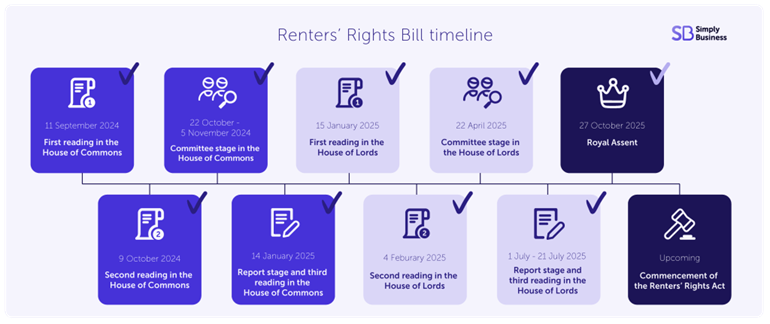
Following a Regional PropertyMark Roadshow, Marie gives a brief breakdown on where The Renters’ Rights Bill has moved through the following stages of Parliament and the changes.
Government has been working for more than 4 years to reform the private renting Sector.
The Renters’ Rights Act 2025 has now gained Royal Assent and is waiting for the implementation of the various parts. The first key change, on 27th December 2025 (2 months after gaining Royal Assent) will give Local Authorities additional powers which involve:
Strengthening local authority enforcement by expanding civil penalties, introducing a package of investigatory powers and bringing in a new requirement for local authorities to report on enforcement activity. Councils will be provided with a range of new investigatory powers including entry into Business and Residential premises.
PHASE 1: 1st May 2026,
Periodic tenancies Removing any fixed term period. All tenancies, new and retrospective will become Assured Tenancies and periodic. This essentially means a tenant can give notice to leave within their first month of their tenancy. Notice will be changed from 1 month to 2 months and must coincide with the last rent day of their tenancy.
Section 21 abolished Again, this will apply to all tenancies and will remove the ability to serve a Section 21 Notice (also known as a no fault eviction). Landlords will be required to rely on Section 8 Notices
Cap on rent in advance 1 month’s rent in advance will be the maximum Landlords can take at the start of tenancies.
Anti-discrimination measures Landlords and Letting agents will not be able to do anything to make a tenant less likely to rent a property (or prevent them from renting it) because they have children or receive benefits.
Ban on rental bidding Landlord’s will not be able to ask for or accept a rent higher than the advertised rent
Annual rent increases via section 13 notices landlords will have to follow the revised section 13 procedure and provide the tenant with a notice detailing the proposed rent increase at least 2 months before it is due to take effect.
Tenant’s rights to request a pet Landlords will have an initial 28 days to consider their tenant’s request, and they will have to provide valid reasons if they refuse it.
PHASE 2 later in 2026, in two stages:
Stage 1 – A roll out of the Database for Landlords.
Stage 2 – Further roll out of the database and introduction of the PRS Landlord’s Ombudsman. A redress scheme service for private rented sector tenants to refer to in the event of a complaint.
PHASE 3 will incorporate the Decent Homes Standard.
Still under consultation, but this will include Minimum Energy Efficiency Standards, reviewing the Housing Health and Safety Rating System (HHSRS), extending Awaab’s Law to the PRS.
Marie Brooks FARLA ANAEA (Comm)Sansaw Property and Lettings ManagerARLA Propertymark Regional Executive for Shropshire and StaffordshireEmail: info@sansaw.co.ukTelephone: 01939 211100